
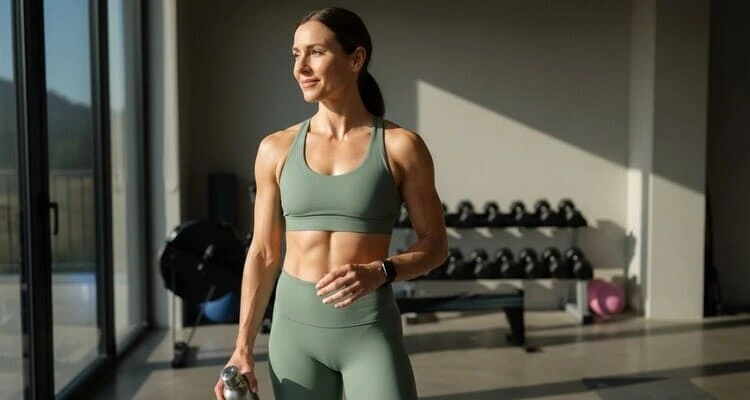

You’re Not Alone (And You’re Not Imagining It)
Let me guess: people tell you that you look fine, that you don’t need to lose weight, that you should be grateful for your “slim” frame. But when you look in the mirror or slip into that fitted dress, you see something different. Soft belly. No definition. A body that feels weak even though the scale says you’re “normal.”
Here’s the truth nobody tells you: how to gain weight without gaining fat isn’t just possible—it’s exactly what you need if you’re stuck in the frustrating middle zone of being skinny-fat.
I know it sounds backwards. Gain weight? When you already feel soft? But stick with me, because what we’re really talking about is trading that softness for muscle, strength, and the toned look you’ve been chasing with cardio and restrictive eating. This isn’t about getting bigger—it’s about getting better.
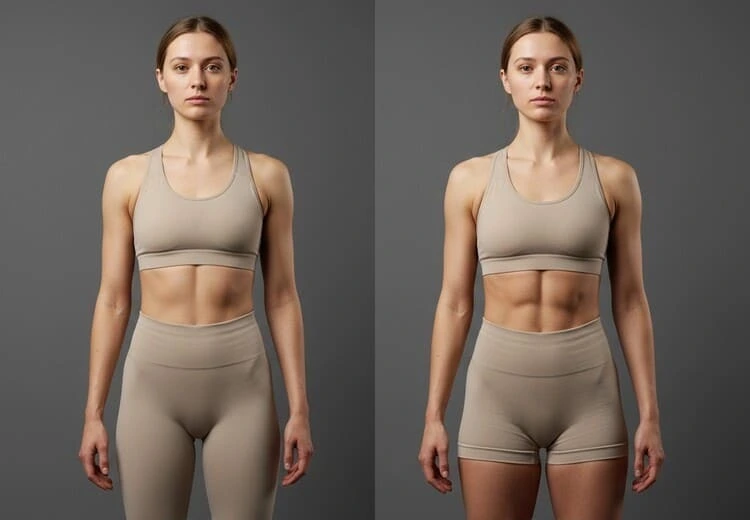
Stick around until the end—I’ve included a Skinny-Fat Success Checklist to help you track your progress!
What Even Is “Skinny-Fat” (And Why Does It Happen)?
Let’s start by putting a name to what you’re experiencing. Being skinny-fat means you have a relatively low body weight but high body fat percentage compared to lean muscle mass. You’re not overweight by BMI standards, but you lack muscle definition and might carry stubborn fat in places like your belly, arms, or thighs. For a comprehensive understanding of this condition, check out this detailed skinny-fat guide for women.
What causes skinny fat? Usually, it’s a combination of:
- Chronic under-eating (yes, eating too little can make you look softer)
- Too much cardio, not enough strength training
- Losing weight through dieting without building muscle
- Genetics and hormones (some women naturally store more fat with less muscle)
- Yo-yo dieting that burns muscle along with fat
The irony? All those things you tried to “get in shape”—skipping meals, running on the treadmill for hours, eating only salads—actually made the problem worse. You lost weight, sure, but you lost muscle and fat, leaving you with that undefined, soft appearance.
Here’s what nobody tells you: you can’t cardio your way out of skinny-fat. And you definitely can’t starve your way out of it.
Body Recomposition Women Need to Understand
This is where things get interesting. Body recomposition is the process of losing fat while simultaneously gaining muscle. It’s the holy grail for women who are skinny-fat because it lets you transform your physique without the scale moving much at all.
Think about it: a pound of muscle takes up less space than a pound of fat. So you can actually weigh the same (or even slightly more) while looking leaner, firmer, and more defined. Your clothes fit better. Your body feels stronger. That’s the magic of recomposition.
But here’s the catch: body recomposition requires you to do two things that might feel scary at first:
- Eat more (especially protein)
- Lift weights (and I mean actually lift, not just hold pink dumbbells)
I know. If you’re like most women I work with, you’re thinking: “But won’t eating more make me gain fat?”
Not if you do it right. And that’s exactly what we’re about to break down.
How to Get Rid of Skinny Fat: The Foundation
Let me be blunt: how to get rid of skinny fat requires you to stop dieting and start building. You need to shift from a weight-loss mindset to a muscle-building mindset. This means:
Step 1: Calculate Your Calories Correctly
You’ve probably been eating in a deficit for so long that your metabolism has adapted. To build muscle, you need a slight caloric surplus—but not so much that you’re drowning in excess calories that turn to fat.
How many calories should I eat to gain muscle without getting fat?
Here’s a simple formula:
- Calculate your maintenance calories (there are plenty of free calculators online)
- Add 100-250 calories above maintenance
- Monitor your progress weekly
For most women, this lands somewhere between 1,800-2,200 calories daily, but your exact number depends on your activity level, metabolism, and starting point.
| Goal | Calorie Approach | What Happens |
|---|---|---|
| Lose fat only | 300-500 deficit | Weight drops, but muscle may decrease too |
| Build muscle only | 300-500 surplus | Muscle increases, but fat might too |
| Body recomposition | 100-250 surplus or maintenance | Slow muscle gain with minimal fat gain |
Step 2: Prioritize Protein Like Your Results Depend On It (Because They Do)
Protein is not just for bodybuilders. It’s the building block your muscles need to repair and grow after workouts. Without enough protein, you’re basically doing all that hard work in the gym for nothing.
Aim for 0.8-1 gram of protein per pound of body weight. If you weigh 130 pounds, that’s 104-130 grams of protein daily.
Good protein sources:
- Chicken breast (26g per 3 oz)
- Greek yogurt (15-20g per cup)
- Eggs (6g per egg)
- Salmon (22g per 3 oz)
- Protein powder (20-25g per scoop)
- Cottage cheese (14g per half cup)
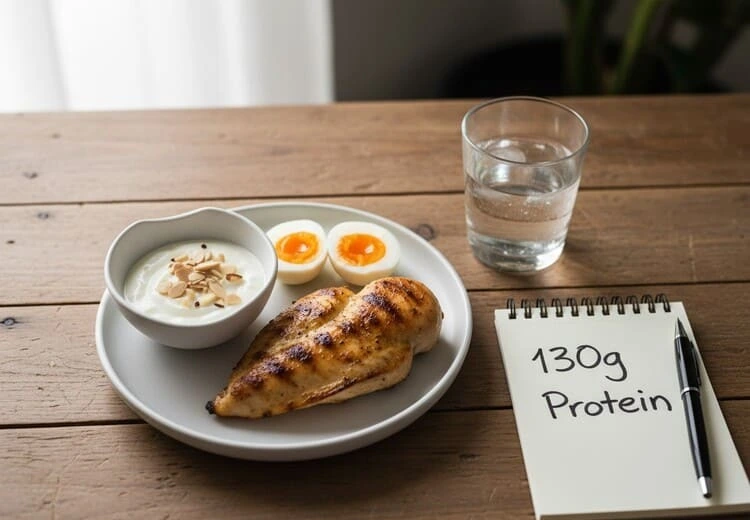
I get it—that probably feels like a lot. But here’s the thing: when you prioritize protein, you’ll naturally feel fuller, which helps prevent overeating on the stuff that would make you gain fat (hello, late-night snacking).
Step 3: Don’t Fear Carbs (Seriously)
Carbs are not the enemy. In fact, they’re essential for muscle growth and recovery. They give you energy to lift heavier, recover faster, and build that toned physique you want.
Focus on complex carbs:
- Sweet potatoes
- Oats
- Brown rice
- Quinoa
- Whole grain bread
Pair them with protein and healthy fats for balanced meals that support muscle growth without spiking insulin unnecessarily.
Best Exercises for Muscle Definition: What Actually Works
Here’s where I’m going to save you a lot of wasted time: those YouTube videos promising “toned arms in 7 days” with light weights and high reps? Not going to cut it.
To build muscle definition, you need progressive overload—gradually increasing the weight, reps, or difficulty of your exercises over time. This is what signals your body to build more muscle.
The Non-Negotiable Exercises
Compound movements should form the foundation of your routine. These exercises work multiple muscle groups at once, giving you the most bang for your buck:
- Squats (builds glutes, quads, core)
- Deadlifts (works posterior chain, core, back)
- Hip thrusts (targets glutes specifically)
- Bench press or push-ups (chest, shoulders, triceps)
- Rows (back, biceps)
- Overhead press (shoulders, triceps, core)
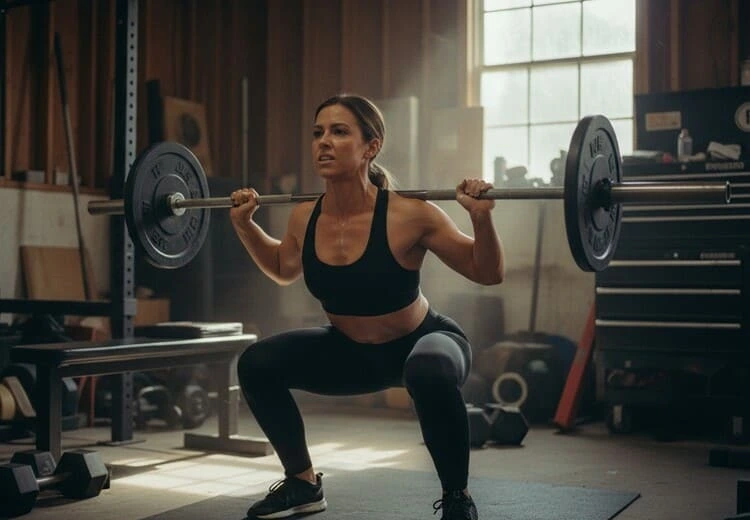
You don’t need fancy equipment. Even a 7-Day Bodyweight Workout Plan: No Equipment Needed for Complete Beginners can get you started if you’re new to strength training.
How to Structure Your Workouts
For a skinny-fat to fit transformation, aim for:
- 3-4 strength training sessions per week
- 6-12 reps per set (heavy enough that the last few reps are challenging)
- 3-4 sets per exercise
- Rest 48 hours between working the same muscle group
Here’s a simple weekly split:
| Day | Focus | Example Exercises |
|---|---|---|
| Monday | Lower Body | Squats, lunges, hip thrusts, calf raises |
| Tuesday | Upper Body | Push-ups, rows, shoulder press, tricep dips |
| Wednesday | Rest or light activity | Walking, yoga, stretching |
| Thursday | Lower Body | Deadlifts, Bulgarian split squats, leg curls |
| Friday | Upper Body | Bench press, pull-ups, bicep curls, planks |
| Weekend | Rest or active recovery | Light cardio, mobility work |
Should I Do Cardio If I Am Skinny-Fat?
Short answer: Yes, but not the way you’re probably doing it.
Cardio isn’t evil, but it shouldn’t be your primary focus. Here’s the deal:
- Too much cardio can interfere with muscle growth and recovery
- The wrong type of cardio (long, steady-state sessions) can actually eat into your muscle mass
- Smart cardio supports your goals without sabotaging them
My recommendation:
- Limit cardio to 2-3 sessions per week, 20-30 minutes max
- Focus on HIIT (High-Intensity Interval Training) or incline walking
- Do cardio after your strength workouts, not before
- Think of cardio as a tool for heart health and conditioning, not your main fat-loss strategy
How to Lose Skinny Fat Belly: The Truth About Spot Reduction
I hate to break it to you, but you can’t target where you lose fat. That soft belly? It’ll gradually reduce as you build muscle throughout your entire body and improve your overall body composition.
Why am I skinny but still have a belly?
Usually, it’s because:
- You have low muscle mass (even if you’re thin)
- Higher body fat percentage than you think
- Bloating or digestive issues
- Poor posture that makes your stomach protrude
The solution isn’t 1,000 crunches a day. It’s:
- Building core strength with compound exercises
- Increasing overall muscle mass
- Eating enough protein and fiber
- Managing stress (high cortisol promotes belly fat storage)
- Getting adequate sleep (7-9 hours)
Your belly will flatten as you gain muscle everywhere else and gradually reduce overall body fat. Patience is key.
How to Avoid Skinny Fat: Prevention and Maintenance
Once you’ve transformed your physique, you’ll want to maintain it. Here’s how to avoid falling back into the skinny-fat trap:
1. Never go back to extreme calorie restriction If you need to lose fat later, do it slowly with a small deficit while maintaining protein and strength training.
2. Keep lifting weights Muscle mass naturally decreases with age. Strength training is a lifelong practice, not a temporary fix.
3. Eat enough protein forever Even when you reach your goals, protein remains crucial for maintaining muscle.
4. Don’t over-rely on cardio It’s tempting to jump back to cardio-only routines, but resistance training should always be your foundation.
5. Monitor how you feel, not just the scale Energy, strength, how your clothes fit—these matter more than the number on the scale.
Can I Turn Fat Into Muscle?
Let’s clear this up: No, you cannot literally turn fat into muscle. They’re completely different tissues.
But here’s what you can do: lose fat while building muscle simultaneously through body recomposition. Your body will use stored fat for energy while protein and strength training stimulate muscle growth.
So while the fat doesn’t “become” muscle, you’re essentially replacing it over time. The net effect? A tighter, more defined physique even if the scale barely moves.
Common Mistakes That Keep You Skinny-Fat
I’ve seen these mistakes sabotage so many women. Avoid them like your transformation depends on it (because it does):
Mistake #1: Not eating enough If you’re stuck at 1,200 calories, wondering why you’re not building muscle—this is why. You can’t build something from nothing.
Mistake #2: Being afraid of getting “bulky” Women don’t have enough testosterone to accidentally get huge. That toned look you want? That’s muscle. You need to build it.
Mistake #3: Doing the same workouts forever Your body adapts. If you’ve been doing the same routine for months, it’s time to increase weight, reps, or difficulty.
Mistake #4: Ignoring sleep and stress You build muscle when you rest, not when you train. Poor sleep = poor results.
Mistake #5: Expecting results in two weeks Real transformation takes 12-16 weeks minimum. Be patient.
The Skinny-Fat to Fit Daily Checklist
Summary Table: Your At-a-Glance Guide
| Category | Daily Goal | Why It Matters |
|---|---|---|
| Protein | 0.8-1g per lb body weight | Builds and maintains muscle |
| Calories | 100-250 above maintenance | Fuels muscle growth without excess fat |
| Strength Training | 3-4x per week | Stimulates muscle development |
| Cardio | 2-3x per week, 20-30 min | Supports heart health without interfering with gains |
| Sleep | 7-9 hours | Essential for recovery and muscle growth |
| Water | 8-10 glasses | Supports all bodily functions and recovery |
| Progress Tracking | Weekly photos/measurements | Monitors body composition changes |
Your Action Checklist
Daily:
- ✅ Hit your protein target (aim for 20-30g per meal)
- ✅ Eat 100-250 calories above maintenance
- ✅ Drink at least 8 glasses of water
- ✅ Get 7-9 hours of quality sleep
- ✅ Take a 10-minute walk (on non-training days)
3-4 Times Per Week:
- ✅ Complete a full-body or split strength training session
- ✅ Focus on compound exercises (squats, deadlifts, presses, rows)
- ✅ Progressively increase weight or reps from last session
- ✅ Stretch or do mobility work post-workout
2-3 Times Per Week:
- ✅ Do 20-30 minutes of HIIT or incline walking
- ✅ Perform cardio after (not before) strength training
Weekly:
- ✅ Take progress photos (same time, same lighting, same outfit)
- ✅ Take body measurements (waist, hips, arms, thighs)
- ✅ Track strength improvements (can you lift heavier than last week?)
- ✅ Meal prep protein-rich foods for the week ahead
- ✅ Plan next week’s workouts
Monthly:
- ✅ Reassess your calories and adjust if needed
- ✅ Review your progress photos and measurements
- ✅ Celebrate non-scale victories (strength gains, how clothes fit, energy levels)
- ✅ Adjust your workout routine to prevent plateaus
Your Transformation Starts With One Decision
Look, I know this feels like a lot. You’ve been told for years that eating less and doing more cardio is the answer. Unlearning that takes courage.
But here’s what I want you to remember: being skinny-fat isn’t a life sentence. You can absolutely transform your body through smart nutrition and strength training. It won’t happen overnight, but it will happen if you’re consistent.
You don’t need to be perfect. You just need to start.
Start eating more protein. Start lifting weights. Start treating your body like something worth building, not something worth shrinking.
The woman you want to become—strong, confident, comfortable in her own skin—she’s already inside you. You just need to give her the fuel and the training to emerge.
Ready to begin your transformation? Subscribe to our community for weekly tips, workout plans, and support from women just like you. Follow us on social media for daily motivation and real transformation stories.
Your skinny-fat to fit journey starts today. Let’s do this.
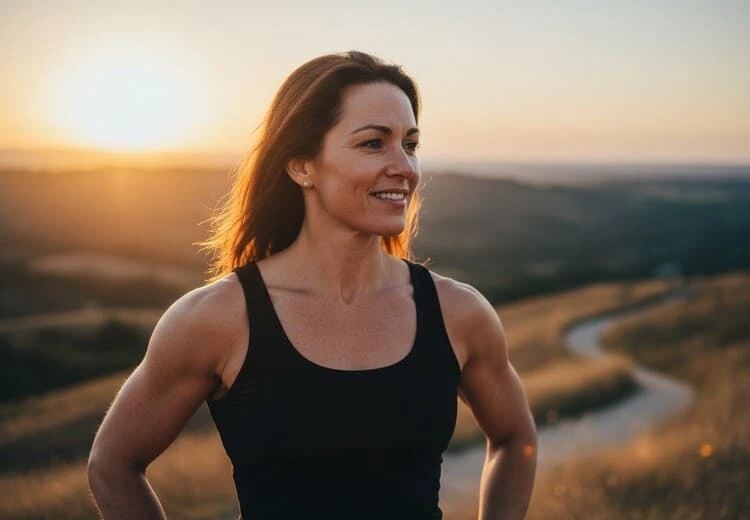
Remember: This is a marathon, not a sprint. Be patient with yourself, trust the process, and most importantly—eat that protein.