
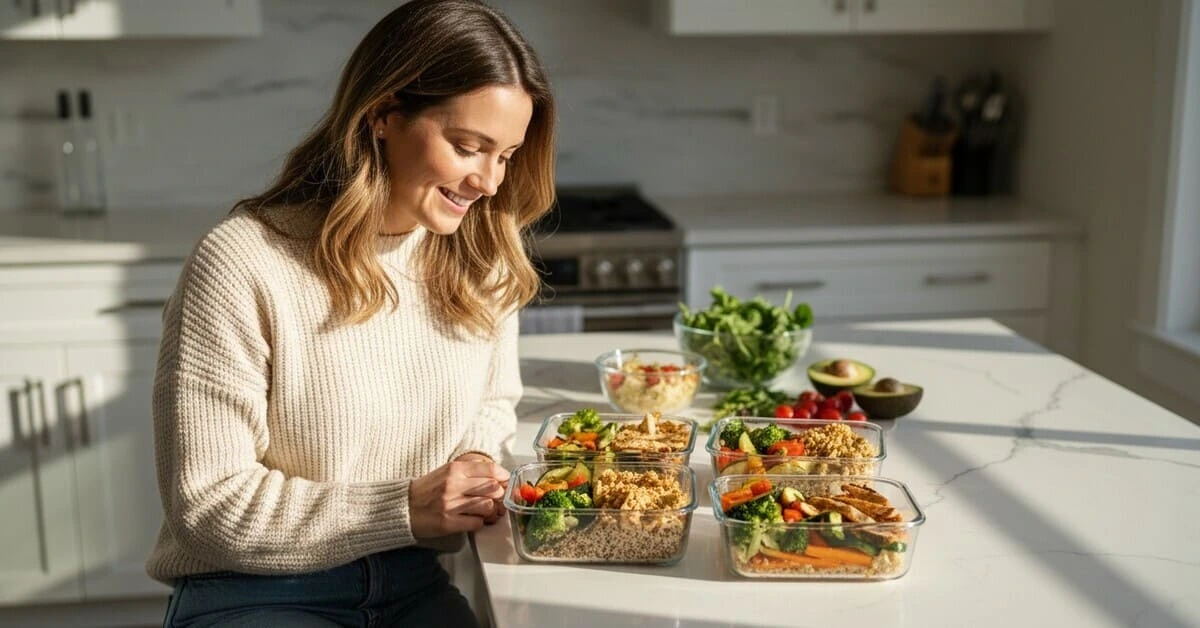

You’ve just been diagnosed with PCOS, and suddenly everyone’s telling you to overhaul your entire diet. Cut carbs! Avoid dairy! Only eat organic! TikTok told me to cut everything, and now you’re standing in your kitchen, overwhelmed, confused, and don’t know where to start—and the thought of spending hours meal prepping feels impossible when you’re already exhausted from symptoms.
I get it. The conflicting advice everywhere is maddening.
One influencer swears by keto. Another says you need complex carbs. Someone’s pushing expensive specialty ingredients you can’t pronounce (and definitely can’t afford on a tight budget). Meanwhile, you’re just trying to feel normal again—to have regular periods, clear skin, and energy that lasts past 2 PM.
Here’s the truth: managing PCOS through diet doesn’t require spending a fortune or giving up everything you love. Research shows that anti-inflammatory eating patterns can significantly reduce PCOS symptoms—and you can do this with regular grocery store ingredients and recipes that take 30 minutes or less.
In this guide, you’ll get 15 beginner-friendly, budget friendly PCOS meal prep recipes that are anti-inflammatory, hormone-balancing, and actually enjoyable to eat. No overwhelming Sunday meal prep marathons, no expensive ingredients you can’t pronounce, and no restrictive dieting that leaves you feeling deprived.
Understanding PCOS and Why Your Diet Matters
Before we dive into recipes, let’s clear up the confusion. You deserve to understand what’s happening in your body—not just follow rules blindly.
What is PCOS? (A Simple Explanation)
Polycystic Ovary Syndrome (PCOS) affects about 1 in 10 women of reproductive age. Despite the name, it’s not really about your ovaries—it’s a metabolic and hormonal condition that shows up as:
- Irregular or missing periods
- Excess hair growth or hair loss
- Acne and skin issues
- Weight gain that’s hard to lose
- Fatigue and mood swings
There are actually four types of PCOS (insulin-resistant, post-pill, inflammatory, and adrenal), but the good news? The PCOS meal prep recipes for beginners I’m sharing work across all types because they focus on reducing inflammation and balancing blood sugar.

The Insulin Resistance Connection
Here’s what most doctors don’t explain clearly: 50-75% of women with PCOS have insulin resistance. Think of insulin as a key that unlocks your cells to let sugar in for energy. When you have insulin resistance, that key doesn’t work as well—so your body makes MORE insulin to compensate.
This excess insulin triggers your ovaries to make extra testosterone (yes, women make testosterone too), which causes:
- Irregular ovulation (making periods unpredictable)
- Difficulty losing weight
- Increased hunger and cravings
- Energy crashes after meals
This is why insulin resistance meal prep focuses on keeping your blood sugar stable. It’s not about cutting carbs completely—it’s about pairing them smartly with protein and fat to avoid those blood sugar spikes and crashes.
Why Anti-Inflammatory Foods Help PCOS
Recent studies show that PCOS involves chronic low-grade inflammation—your body is in a constant state of mild stress, which makes everything worse.
Anti inflammatory recipes for PCOS help by:
- Reducing that background inflammation
- Improving insulin sensitivity
- Supporting better hormone balance
- Clearing up skin
- Regulating periods
- Boosting energy levels
The best part? These aren’t exotic superfoods. We’re talking about regular vegetables, lean proteins, and healthy fats you can find at any grocery store.
PCOS Meal Prep Basics: What You Need to Know Before You Start
Let’s make this so simple that overwhelm isn’t even an option.
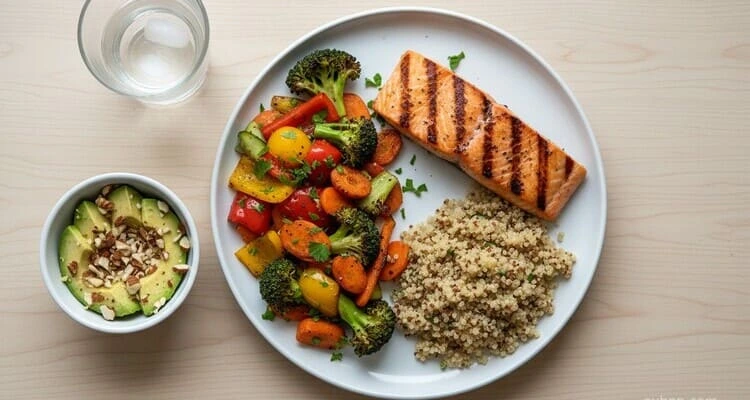
The PCOS Plate Formula (Protein + Fiber + Healthy Fat)
Forget counting calories or weighing food. Here’s the formula that actually works:
Every PCOS Meal Should Have:
🍗 Protein (palm-sized portion)
Why: Keeps you full, stabilizes blood sugar, supports hormone production
Examples: Eggs, chicken, fish, Greek yogurt, lentils, chickpeas
🥦 Fiber (half your plate)
Why: Slows sugar absorption, feeds good gut bacteria, helps eliminate excess hormones
Examples: Any vegetables, whole grains, beans, berries
🥑 Healthy Fat (thumb-sized portion)
Why: Helps absorb vitamins, reduces inflammation, keeps you satisfied
Examples: Olive oil, avocado, nuts, seeds, fatty fish
That’s it. No complicated macros, no food scales. Just build each meal with these three components and you’re 90% there.
Foods to Emphasize (Not Eliminate)
I’m so tired of PCOS advice that tells you what you CAN’T eat. Let’s flip that. Here’s what to ADD to your meals:
| Category | Affordable Options | Why They Help |
|---|---|---|
| Lean Proteins | Eggs, canned tuna, rotisserie chicken, ground turkey, lentils | Blood sugar balance, satiety |
| Complex Carbs | Oats, quinoa, sweet potatoes, brown rice, beans | Steady energy, hormone production |
| Healthy Fats | Olive oil, avocado, nuts, seeds, salmon | Reduces inflammation, hormone building blocks |
| Vegetables | Frozen veggies, spinach, broccoli, bell peppers, tomatoes | Fiber, antioxidants, inflammation fighters |
About Carbs: Can I Eat Carbs with PCOS?
Let’s address the elephant in the room because I know you’re afraid to eat carbs. The answer is YES, you absolutely can and SHOULD eat carbs.
Here’s why: Your body needs carbs to produce hormones and ovulate properly. According to Johns Hopkins research on PCOS nutrition, the goal isn’t to eliminate carbs—it’s to choose the right ones and pair them strategically.
The Carb Rule: Choose complex carbs (whole grains, beans, sweet potatoes) over refined carbs (white bread, pastries, sugary drinks) and always pair them with protein or fat to slow sugar absorption. That’s it. No need to fear carbs or cut them out completely.
Budget-Friendly Meal Prep Tips
Can’t afford organic everything? Join the club. Here’s how to eat well for PCOS without spending a fortune:
- Frozen vegetables are your best friend – Just as nutritious as fresh, often cheaper, and they don’t go bad
- Buy proteins on sale and freeze – Stock up when chicken or ground turkey is discounted
- Eggs and canned fish are protein MVPs – Cheap, shelf-stable, versatile
- Batch cook cheap staples – A big pot of lentils or quinoa lasts all week
- Shop your pantry first – Use what you have before buying more
- Skip organic when it doesn’t matter – Avocados, bananas, onions have protective peels; save money here
Meal Prep Doesn’t Have to Mean “Meal Prep Sunday”
If the thought of spending 4 hours cooking on Sunday makes you want to cry, I have good news: that’s not required.
Here are flexible approaches that actually work:
Choose Your Prep Style:
Option 1: Ingredient Prep
Spend 30 minutes washing and chopping vegetables, cooking a batch of protein, making a pot of quinoa. Mix and match throughout the week.
Option 2: Mini Prep Sessions
15 minutes in the morning or evening, prep one component. No marathon required.
Option 3: Cook Once, Eat Twice
Make double dinner. Tomorrow’s lunch is done.
Option 4: No-Cook Assembly
Use rotisserie chicken, pre-washed greens, canned beans. Assemble, don’t cook.
The goal is to make your life EASIER, not add another exhausting task to your busy schedule.
15 Easy PCOS Meal Prep Recipes for Beginners
Each of these recipes is designed to balance blood sugar, reduce inflammation, and support hormone health. They’re budget-friendly (most under $3-4 per serving), beginner-friendly (30 minutes or less), and family-friendly (no need to cook separate meals). These are real recipes for real life.
BREAKFAST RECIPES
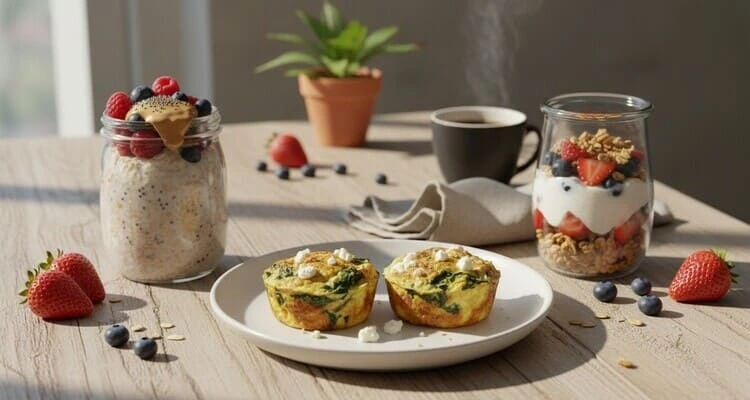
Recipe 1: Protein-Packed Egg Muffins with Spinach and Feta
⏱️ Prep: 10 min | Cook: 20 min | Makes: 12 muffins | Cost: ~$0.50/serving
Why it’s PCOS-friendly: High protein stabilizes blood sugar, spinach provides anti-inflammatory nutrients, portable for busy mornings
Ingredients:
- 12 large eggs
- 2 cups fresh spinach, chopped
- 1/2 cup feta cheese, crumbled
- 1/4 cup milk (any kind)
- 1/2 tsp garlic powder
- Salt and pepper to taste
- Cooking spray
Instructions:
- Preheat oven to 350°F. Spray a 12-cup muffin tin with cooking spray.
- Whisk eggs, milk, garlic powder, salt, and pepper in a large bowl.
- Stir in spinach and feta. Pour into muffin cups, filling 3/4 full.
- Bake 18-20 minutes until set. Cool and store in fridge up to 5 days.
💡 Meal Prep Tip: Make Sunday, grab 2-3 each morning. Reheat 30 seconds in microwave. Pairs perfectly with a piece of fruit.
Recipe 2: Anti-Inflammatory Overnight Oats (3 Variations)
⏱️ Prep: 5 min | No cooking! | Makes: 1 serving | Cost: ~$1.25/serving
Why it’s PCOS-friendly: Fiber-rich oats are low glycemic index, omega-3 from chia seeds fights inflammation, protein keeps you full
Base Ingredients (for all variations):
- 1/2 cup rolled oats
- 1/2 cup Greek yogurt (protein!)
- 1/2 cup milk of choice
- 1 tbsp chia seeds
- 1 tsp vanilla extract
- Pinch of cinnamon
Variation 1 – Berry Almond: Add 1/2 cup frozen berries, 1 tbsp almond butter, 1 tsp honey
Variation 2 – Apple Cinnamon: Add 1/2 diced apple, 1 tbsp chopped walnuts, extra cinnamon
Variation 3 – Chocolate Peanut Butter: Add 1 tbsp cocoa powder, 1 tbsp peanut butter, 1 tsp maple syrup
Instructions:
- Mix base ingredients in a mason jar or container.
- Add your chosen variation ingredients.
- Stir well, cover, refrigerate overnight (or minimum 4 hours).
- Eat cold or microwave 30 seconds if you prefer warm.
💡 Meal Prep Tip: Make 5 jars on Sunday for grab-and-go breakfasts all week. Lasts 5 days in fridge.
Recipe 3: Quick Greek Yogurt Parfait Prep Jars
⏱️ Prep: 10 min total for 5 jars | Cost: ~$1.50/serving
Why it’s PCOS-friendly: Greek yogurt provides protein + probiotics for gut health, berries are low-glycemic antioxidants, nuts add healthy fats
Ingredients (for 5 jars):
- 2.5 cups plain Greek yogurt
- 2 cups mixed berries (fresh or frozen)
- 1 cup granola (low-sugar variety)
- 1/2 cup chopped nuts (almonds, walnuts, or pecans)
- Optional: 5 tsp honey or maple syrup
Instructions:
- In each mason jar, layer: 1/4 cup berries, 1/2 cup yogurt, 2 tbsp granola, 1 tbsp nuts.
- Repeat layers ending with berries on top.
- Drizzle with 1 tsp honey if desired.
- Seal and refrigerate up to 5 days.
💡 Meal Prep Tip: Keep granola separate until eating if you prefer it crunchy. Add it in the morning.
LUNCH RECIPES
Recipe 4: Mediterranean Quinoa Bowl with Grilled Chicken
⏱️ Prep: 15 min | Cook: 20 min | Makes: 4 servings | Cost: ~$3.50/serving
Why it’s PCOS-friendly: Complete protein from quinoa + chicken, healthy fats from olive oil and feta, anti-inflammatory vegetables
Ingredients:
- 1 cup quinoa, uncooked
- 1 lb chicken breast
- 2 cups cherry tomatoes, halved
- 1 cucumber, diced
- 1/2 cup kalamata olives
- 1/2 cup feta cheese
- 3 tbsp olive oil
- 2 tbsp lemon juice
- 1 tsp oregano
- Salt, pepper, garlic powder
Instructions:
- Cook quinoa according to package (usually 2 cups water, 15 minutes).
- Season chicken with salt, pepper, garlic powder. Grill or pan-cook until done (165°F internal). Slice.
- Mix olive oil, lemon juice, and oregano for dressing.
- Divide quinoa into 4 containers. Top each with chicken, tomatoes, cucumber, olives, feta.
- Drizzle with dressing. Store up to 4 days.
💡 Meal Prep Tip: Cook quinoa and chicken in bulk on Sunday. These bowls assemble in 5 minutes.
Recipe 5: Tuna Salad Lettuce Wraps (No-Cook Option)
⏱️ Prep: 10 min | No cooking! | Makes: 2 servings | Cost: ~$2.00/serving
Why it’s PCOS-friendly: Omega-3s from tuna reduce inflammation, low-carb option for insulin resistance, quick protein boost
Ingredients:
- 2 cans tuna in water, drained
- 1/4 cup Greek yogurt (instead of mayo for protein)
- 1 celery stalk, diced
- 2 tbsp red onion, minced
- 1 tbsp lemon juice
- 1 tsp Dijon mustard
- Salt, pepper to taste
- 8 large lettuce leaves (romaine or butter lettuce)
- Optional: sliced avocado, tomato
Instructions:
- Mix tuna, Greek yogurt, celery, onion, lemon juice, mustard, salt, and pepper.
- Scoop into lettuce leaves.
- Add avocado or tomato if desired.
💡 Meal Prep Tip: Make tuna salad ahead, store separately from lettuce. Assemble when ready to eat. Lasts 3 days.
Recipe 6: Lentil and Vegetable Soup (Budget Star)
⏱️ Prep: 10 min | Cook: 30 min | Makes: 6 servings | Cost: ~$1.25/serving (CHEAPEST!)
Why it’s PCOS-friendly: Fiber powerhouse, plant protein, anti-inflammatory spices, fills you up on a budget
Ingredients:
- 1 cup dried lentils (red or green)
- 1 onion, diced
- 3 carrots, chopped
- 3 celery stalks, chopped
- 3 cloves garlic, minced
- 1 can diced tomatoes (14 oz)
- 6 cups vegetable broth
- 2 cups spinach or kale
- 1 tsp cumin
- 1 tsp turmeric (anti-inflammatory!)
- 2 tbsp olive oil
- Salt, pepper
Instructions:
- Heat olive oil in large pot. Sauté onion, carrots, celery 5 minutes.
- Add garlic, cumin, turmeric. Cook 1 minute until fragrant.
- Add lentils, tomatoes, broth. Bring to boil, then simmer 25 minutes until lentils are tender.
- Stir in spinach last 2 minutes. Season with salt and pepper.
💡 Meal Prep Tip: This freezes beautifully! Make a double batch and freeze half in individual portions.
Recipe 7: Asian-Inspired Salmon and Veggie Sheet Pan
⏱️ Prep: 10 min | Cook: 20 min | Makes: 4 servings | Cost: ~$4.00/serving
Why it’s PCOS-friendly: Omega-3 fatty acids reduce inflammation, one-pan ease, colorful veggies provide antioxidants
Ingredients:
- 4 salmon fillets (can use frozen, thawed)
- 3 cups broccoli florets
- 2 bell peppers, sliced
- 1 tbsp sesame oil
- 2 tbsp soy sauce (low-sodium)
- 1 tbsp honey
- 1 tsp ginger, minced
- 2 cloves garlic, minced
- Sesame seeds for topping
Instructions:
- Preheat oven to 400°F. Line sheet pan with parchment paper.
- Mix sesame oil, soy sauce, honey, ginger, garlic.
- Arrange vegetables on pan, drizzle with half the sauce.
- Place salmon on pan, brush with remaining sauce.
- Roast 18-20 minutes until salmon flakes easily. Sprinkle sesame seeds.
💡 Budget Swap: Frozen salmon works great and costs less. Just thaw overnight in fridge.
DINNER RECIPES
Recipe 8: Slow Cooker Chicken and Vegetable Stew
⏱️ Prep: 15 min | Cook: 4-6 hrs (hands-off!) | Makes: 6 servings | Cost: ~$2.50/serving
Why it’s PCOS-friendly: Set-it-and-forget-it convenience, loads of vegetables, lean protein, warms you up
Ingredients:
- 1.5 lbs chicken thighs (bone-in is cheaper and more flavorful)
- 3 carrots, chopped
- 3 celery stalks, chopped
- 2 potatoes, cubed (yes, carbs are okay!)
- 1 onion, diced
- 3 cloves garlic, minced
- 4 cups chicken broth
- 1 tsp thyme
- 1 tsp rosemary
- 1 bay leaf
- Salt, pepper
Instructions:
- Place all vegetables in slow cooker.
- Season chicken with salt, pepper, herbs. Place on top of vegetables.
- Pour broth over everything. Add bay leaf.
- Cook on low 6 hours or high 4 hours until chicken is tender.
- Remove chicken, shred meat, discard bones. Return meat to pot.
💡 Meal Prep Tip: Make this on Sunday while you do other things. Freezes perfectly for busy weeknights.
Recipe 9: Turkey and Sweet Potato Skillet
⏱️ Prep: 10 min | Cook: 25 min | Makes: 4 servings | Cost: ~$3.00/serving
Why it’s PCOS-friendly: Lean protein, complex carbs from sweet potato, one-pan simplicity, family-friendly
Ingredients:
- 1 lb ground turkey
- 2 medium sweet potatoes, diced small
- 1 bell pepper, diced
- 1 onion, diced
- 2 cloves garlic, minced
- 2 cups spinach
- 1 tsp paprika
- 1/2 tsp cumin
- 2 tbsp olive oil
- Salt, pepper
Instructions:
- Heat 1 tbsp oil in large skillet. Add sweet potato, cook 10 minutes stirring occasionally until starting to soften.
- Push potatoes to side. Add remaining oil, cook turkey until browned, breaking it up.
- Add onion, pepper, garlic, paprika, cumin. Cook 5 minutes.
- Stir everything together. Add spinach, cook until wilted. Season to taste.
💡 Meal Prep Tip: Divide into 4 containers. Reheats beautifully. Add hot sauce or avocado when serving.
Recipe 10: Veggie-Packed Egg Fried Rice (Leftover Makeover)
⏱️ Prep: 10 min | Cook: 15 min | Makes: 4 servings | Cost: ~$1.75/serving
Why it’s PCOS-friendly: Uses leftover rice, vegetable-forward, eggs add protein, budget-friendly
Ingredients:
- 3 cups cooked brown rice (day-old works best)
- 4 eggs, beaten
- 2 cups mixed frozen vegetables (peas, carrots, corn)
- 1 cup broccoli, chopped small
- 3 green onions, sliced
- 3 cloves garlic, minced
- 3 tbsp soy sauce (low-sodium)
- 1 tbsp sesame oil
- 2 tbsp vegetable oil
- Optional: sriracha for heat
Instructions:
- Heat 1 tbsp oil in large skillet or wok over high heat. Scramble eggs, remove and set aside.
- Add remaining oil. Stir-fry frozen veggies and broccoli 5 minutes.
- Add garlic, cook 30 seconds. Add rice, breaking up clumps.
- Pour soy sauce and sesame oil over rice. Stir-fry 3 minutes.
- Add eggs back in, plus green onions. Toss everything together.
💡 Meal Prep Tip: This is genius for using up leftover rice. Make extra rice with dinner, use it for this later in the week.
Recipe 11: Baked Cod with Roasted Vegetables
⏱️ Prep: 10 min | Cook: 25 min | Makes: 4 servings | Cost: ~$3.50/serving
Why it’s PCOS-friendly: Lean protein, anti-inflammatory vegetables, simple and elegant
Ingredients:
- 4 cod fillets (frozen works great)
- 2 zucchini, sliced
- 1 pint cherry tomatoes
- 1 red onion, sliced
- 3 tbsp olive oil
- 2 cloves garlic, minced
- 1 lemon (juice and zest)
- 1 tsp Italian seasoning
- Fresh parsley
- Salt, pepper
Instructions:
- Preheat oven to 400°F. Line baking sheet with parchment.
- Toss vegetables with 2 tbsp olive oil, salt, pepper. Spread on sheet.
- Roast vegetables 10 minutes.
- Meanwhile, mix remaining oil, garlic, lemon juice, Italian seasoning.
- Place cod on vegetables. Brush with oil mixture. Roast 12-15 more minutes until fish flakes.
- Garnish with lemon zest and parsley.
💡 Budget Tip: Frozen cod is significantly cheaper and works perfectly. Just thaw in fridge overnight.
Recipe 12: One-Pot Chicken and Chickpea Curry
⏱️ Prep: 15 min | Cook: 30 min | Makes: 6 servings | Cost: ~$2.25/serving
Why it’s PCOS-friendly: Anti-inflammatory spices like turmeric, fiber + protein combo from chickpeas, warming and satisfying
Ingredients:
- 1 lb chicken breast, cubed
- 2 cans chickpeas, drained (15 oz each)
- 1 can coconut milk (14 oz)
- 1 can diced tomatoes (14 oz)
- 1 onion, diced
- 3 cloves garlic, minced
- 1 tbsp curry powder
- 1 tsp turmeric
- 1 tsp cumin
- 2 cups spinach
- 2 tbsp olive oil
- Salt to taste
- Serve with: brown rice or cauliflower rice
Instructions:
- Heat oil in large pot. Brown chicken pieces, remove and set aside.
- Sauté onion 5 minutes. Add garlic, curry powder, turmeric, cumin. Cook 1 minute.
- Add tomatoes, coconut milk, chickpeas. Bring to simmer.
- Return chicken to pot. Simmer 20 minutes until chicken is cooked through.
- Stir in spinach last 2 minutes. Taste and add salt.
💡 Meal Prep Tip: This gets better as it sits! Make Monday, eat through Thursday. The flavors deepen beautifully.
SNACKS & SIDES
Recipe 13: Homemade Hummus with Veggie Sticks
⏱️ Prep: 10 min | Makes: 8 servings | Cost: ~$0.75/serving
Why it’s PCOS-friendly: Fiber and protein from chickpeas, healthy fats, anti-inflammatory, beats store-bought
Ingredients:
- 2 cans chickpeas, drained (save liquid!)
- 1/4 cup tahini (or sub peanut butter for budget option)
- 3 tbsp olive oil
- 2 tbsp lemon juice
- 2 cloves garlic
- 1/2 tsp cumin
- Salt to taste
- 2-4 tbsp reserved chickpea liquid (for consistency)
- Veggie sticks: carrots, celery, bell peppers, cucumbers
Instructions:
- Blend chickpeas, tahini, olive oil, lemon juice, garlic, cumin, and salt in food processor.
- Add chickpea liquid 1 tbsp at a time until creamy and smooth.
- Taste and adjust seasoning.
- Store in container. Prep veggie sticks separately.
💡 Meal Prep Tip: Hummus lasts 7 days. Prep veggie sticks at start of week. Grab as needed for snacks.
Recipe 14: Energy Balls (No-Bake)
⏱️ Prep: 15 min | Makes: 20 balls | Cost: ~$0.40/ball
Why it’s PCOS-friendly: Blood sugar balancing from protein and fiber, portable, satisfies sweet cravings healthfully
Ingredients:
- 1 cup rolled oats
- 1/2 cup almond butter (or peanut butter)
- 1/3 cup honey or maple syrup
- 1/4 cup ground flaxseed (omega-3!)
- 1/4 cup mini chocolate chips
- 1 tsp vanilla extract
- Pinch of salt
- Optional: 2 tbsp chia seeds or protein powder
Instructions:
- Mix all ingredients in a bowl until well combined.
- Refrigerate mixture 30 minutes (makes rolling easier).
- Roll into 20 balls, about 1 inch each.
- Store in airtight container in fridge up to 2 weeks.
💡 Meal Prep Tip: Make a double batch. These freeze beautifully! Grab one for a quick breakfast or pre-workout snack.
Recipe 15: Roasted Chickpeas (Crunchy Snack)
⏱️ Prep: 5 min | Cook: 30 min | Makes: 4 servings | Cost: ~$0.50/serving
Why it’s PCOS-friendly: Protein + fiber combo, satisfies crunchy chip cravings, incredibly cheap
Ingredients:
- 2 cans chickpeas, drained and dried well
- 2 tbsp olive oil
- Seasonings (choose one):
- Savory: 1 tsp paprika, 1/2 tsp garlic powder, 1/2 tsp salt
- Spicy: 1 tsp chili powder, 1/2 tsp cumin, pinch cayenne
- Sweet: 1 tsp cinnamon, 1 tbsp maple syrup
Instructions:
- Preheat oven to 400°F. Pat chickpeas VERY dry with paper towels (this is key for crunch).
- Toss with oil and your chosen seasonings.
- Spread on baking sheet in single layer.
- Roast 30-35 minutes, shaking pan every 10 minutes, until crispy and golden.
- Cool completely before storing (they crisp more as they cool).
💡 Meal Prep Tip: Store in airtight container at room temp up to 3 days. Re-crisp in oven 5 minutes if needed.
Your Weekly PCOS Meal Prep Plan
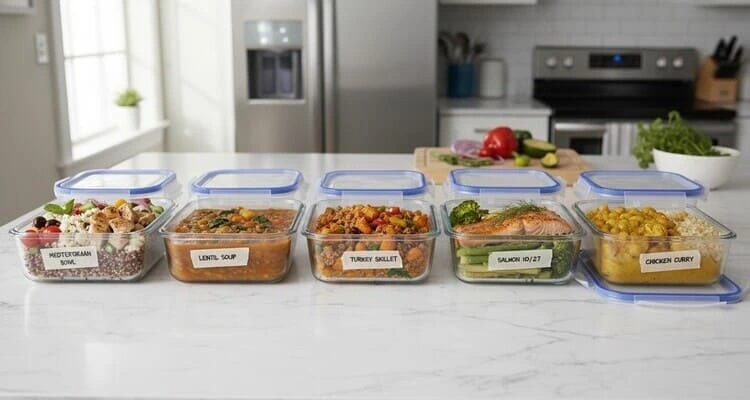
Feeling overwhelmed about how do I start meal prepping with PCOS? Here’s a realistic weekly plan that takes 2 hours max on Sunday:
Sample Week Layout
| Day | Breakfast | Lunch | Dinner | Snack |
|---|---|---|---|---|
| Monday | Egg Muffins x2 | Mediterranean Quinoa Bowl | Slow Cooker Chicken Stew | Hummus + Veggies |
| Tuesday | Overnight Oats (Berry) | Lentil Soup | Turkey Sweet Potato Skillet | Energy Ball x2 |
| Wednesday | Greek Yogurt Parfait | Mediterranean Quinoa Bowl | Chicken Chickpea Curry | Roasted Chickpeas |
| Thursday | Egg Muffins x2 | Tuna Lettuce Wraps | Salmon Sheet Pan | Hummus + Veggies |
| Friday | Overnight Oats (PB Chocolate) | Lentil Soup | Baked Cod with Veggies | Energy Ball x2 |
Sunday Prep Tasks (2 Hours Max)
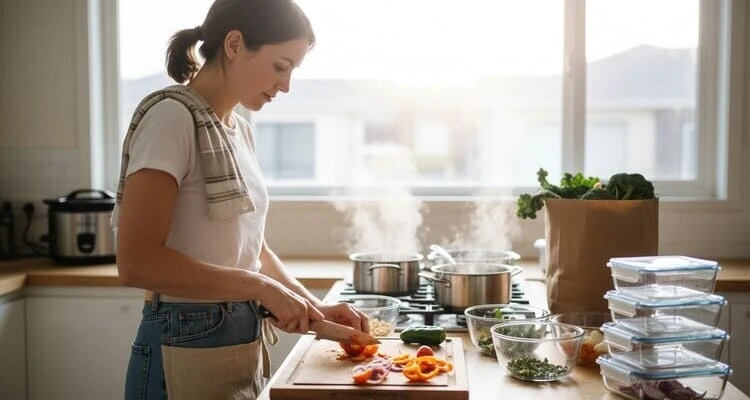
Here’s Your 2-Hour Sunday Gameplan:
9:00-9:30 AM: Breakfast Prep
- Make egg muffins (in oven 20 min while you do other stuff)
- Assemble 5 overnight oats jars
- Prep 5 yogurt parfaits
9:30-10:15 AM: Batch Cook Proteins & Grains
- Start slow cooker chicken stew
- Cook quinoa (for Mediterranean bowls)
- Make lentil soup on stovetop
10:15-10:45 AM: Snack Prep
- Make energy balls
- Roast chickpeas
- Make hummus, chop veggie sticks
10:45-11:00 AM: Final Assembly
- Assemble Mediterranean quinoa bowls
- Portion lentil soup into containers
- Clean up while slow cooker finishes
Done! You’ve just set yourself up for a week of easy, hormone-balancing meals.
Shopping List Template
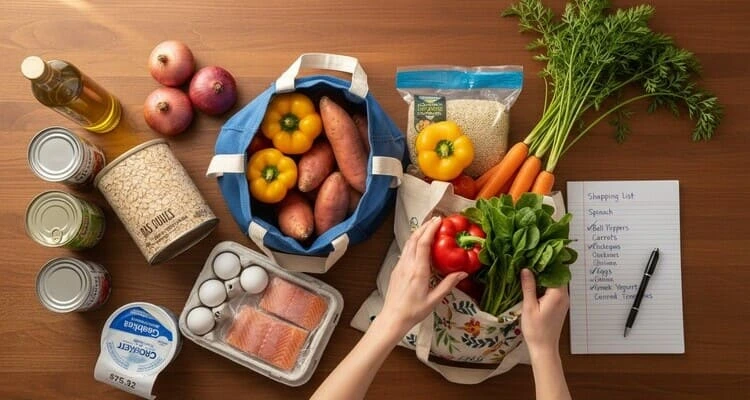
Budget-Friendly PCOS Grocery List
PROTEINS ($25-30)
- 2 dozen eggs
- 1 lb chicken breast or thighs
- 1 lb ground turkey
- 4 salmon or cod fillets (frozen is fine!)
- 2 cans tuna
- Greek yogurt (large container)
PANTRY STAPLES ($15-20)
- Rolled oats
- Quinoa
- Brown rice
- 4 cans chickpeas
- 1 cup dried lentils
- Canned diced tomatoes (2)
- Coconut milk (1 can)
- Almond or peanut butter
- Olive oil
- Nuts and seeds
FRESH/FROZEN PRODUCE ($20-25)
- Spinach or mixed greens
- Broccoli
- Bell peppers (3)
- Carrots
- Celery
- Onions (3)
- Sweet potatoes (2)
- Cherry tomatoes
- Cucumber
- Mixed frozen vegetables (2 bags)
- Frozen berries
- Lemons (2)
- Garlic
DAIRY ($8-10)
- Feta cheese
- Milk of choice
TOTAL WEEKLY BUDGET: ~$70-85
This feeds one person breakfast, lunch, dinner, and snacks for the week. That’s about $10-12 per day—less than most people spend on takeout for ONE meal!
Frequently Asked Questions About PCOS Meal Prep
What can I meal prep for PCOS?
Focus on balanced plates with protein, fiber, and healthy fats. The best PCOS meal prep recipes for beginners include things like egg muffins for breakfast, grain bowls with chicken for lunch, slow cooker stews for dinner, and snacks like energy balls or roasted chickpeas. The key is choosing recipes that reheat well and don’t require daily cooking. Start with 2-3 recipes and rotate them weekly until you build confidence.
Can I eat carbs with PCOS?
Yes! You absolutely can and should eat carbs. This is one of the biggest myths causing unnecessary stress. Your body needs carbs to produce hormones and ovulate properly. The key is choosing complex carbs (whole grains, sweet potatoes, beans, oats) over refined carbs (white bread, sugary snacks) and always pairing them with protein or healthy fat to prevent blood sugar spikes. Cutting carbs completely can actually worsen hormone imbalances and make you feel deprived and miserable. Carbs aren’t your enemy—refined sugar and lack of balance are.
How do I start meal prepping with PCOS?
Start small—don’t try to prep every meal for the week on day one. Pick ONE component to prep (like cooking a batch of chicken or quinoa) or choose just breakfast to meal prep for the week. As you get comfortable, add lunch, then dinner. You don’t need a “Meal Prep Sunday” marathon. Even 15-minute mini prep sessions throughout the week work. Use shortcuts like rotisserie chicken, frozen vegetables, and no-cook options. The goal is to make life easier, not add stress.
What foods reduce inflammation in PCOS?
The best anti inflammatory recipes for PCOS include foods rich in omega-3s (salmon, walnuts, flaxseeds), colorful vegetables (berries, leafy greens, bell peppers), anti-inflammatory spices (turmeric, ginger, cinnamon), and healthy fats (olive oil, avocado). Focus on whole, minimally processed foods. Specific inflammation fighters include fatty fish 2-3x per week, a rainbow of vegetables daily, nuts and seeds as snacks, and cooking with olive oil and anti-inflammatory spices. These foods help calm the chronic low-grade inflammation that worsens PCOS symptoms.
How many meals should I eat a day with PCOS?
Most women with PCOS do best with 3 balanced meals plus 1-2 snacks per day. The key is not skipping meals—going too long without eating can cause blood sugar crashes and trigger insulin spikes when you finally do eat. Aim to eat every 3-4 hours to maintain stable blood sugar. Some women prefer intermittent fasting, but this doesn’t work for everyone with PCOS and can worsen hormones for some. Listen to your body. If you’re hungry, eat. Focus on WHAT you’re eating (the protein-fiber-fat formula) more than meal timing.
Do I need to buy organic for PCOS?
No! Organic is nice if you can afford it, but it’s absolutely not necessary to manage PCOS symptoms. Don’t let expensive specialty ingredients on a tight budget stop you from eating well. Frozen vegetables are just as nutritious as fresh (sometimes more so). Conventional produce is perfectly fine. If budget allows and you want to prioritize, buy organic for the “Dirty Dozen” (strawberries, spinach, apples) and save money on the “Clean Fifteen” (avocados, onions, cabbage). But honestly? Regular eggs, frozen salmon, and conventional vegetables will work just as well for balancing hormones.
Tips for Success with PCOS Meal Prep
Beyond the recipes, here’s what actually helps women stick with PCOS meal prep for weight loss beginners and hormone management:
Practical Tips
- Start with 2-3 recipes you’ll actually eat – Don’t force yourself to eat foods you hate just because they’re “healthy.” You won’t stick with it.
- Prep ingredients, not just full meals – Wash and chop vegetables, cook protein and grains in bulk. Then mix-and-match during the week.
- Use your freezer strategically – Soups, stews, egg muffins, energy balls—most of these freeze beautifully. Make double batches.
- Keep it simple – Complexity kills consistency. A basic grilled chicken with roasted vegetables is a perfectly good PCOS meal.
- Invest in good containers – Glass meal prep containers make reheating easier and help you see what you have.
- Track how you feel – Notice which meals give you sustained energy vs. which ones cause crashes. Your body will tell you what works.
Mindset Tips
- Progress over perfection – You don’t have to do this perfectly. Making healthy meals 70% of the time is infinitely better than 0%.
- This is a journey, not a quick fix – PCOS management is long-term. Be patient with yourself as you figure out what works.
- Food is medicine AND enjoyment – Don’t make eating a joyless chore. Find PCOS-friendly versions of foods you love.
- You don’t have to be perfect to see results – Many women see symptom improvements within 4-6 weeks of eating more balanced meals, even if they’re not following a strict diet.
- Give yourself grace on hard days – Some days you’ll eat takeout. That’s okay. One meal doesn’t undo your progress. Just get back on track at the next meal.
- Celebrate small wins – Notice when your period comes more regularly, when your energy improves, when your skin clears. These victories matter.
A Note on Weight Loss and PCOS
If you’re using these PCOS meal prep for weight loss beginners recipes hoping to lose weight, know this: weight loss with PCOS is slower and more challenging than for women without PCOS. This isn’t your fault—it’s the insulin resistance and hormone imbalances working against you.
However, these anti-inflammatory, blood sugar-balancing meals will help. Many women find that once they get their insulin under control, weight becomes easier to manage. Focus first on how you FEEL—more energy, better periods, clearer skin, stable mood. The scale will follow, even if it takes longer than you’d like.
And remember: you can see symptom improvements and better health markers even without significant weight loss. You deserve to feel good in your body regardless of the number on the scale.

Beyond Diet: Other Factors That Help PCOS
While nutrition is crucial, it’s not the only piece of the puzzle. Here are other factors that complement your insulin resistance meal prep efforts:
| Factor | Why It Matters | Simple Action |
|---|---|---|
| Movement | Improves insulin sensitivity | 30-min walk after meals |
| Sleep | Regulates hunger hormones | Aim for 7-8 hours nightly |
| Stress Management | Cortisol worsens insulin resistance | 5 min daily breathing/meditation |
| Supplements | Fill nutritional gaps | Ask doctor about inositol, vitamin D |
| Cycle Tracking | Helps identify patterns | Track periods, symptoms, energy |
Speaking of cycle tracking, understanding what your period is telling you about your overall health is crucial. Check out our guide on 7 Things Your Period Says About Your Health: A Vital Guide to Your Cycle to better understand your hormonal patterns.
Conclusion: You’ve Got This
If you’re still feeling overwhelmed—I get it. PCOS is hard enough dealing with symptoms without adding the stress of completely overhauling your diet.
But here’s what I want you to remember: You now have 15 beginner-friendly, budget friendly PCOS meal prep recipes that are designed specifically to balance blood sugar and reduce inflammation. Each one uses affordable ingredients you can find at any grocery store. None require hours of complicated prep. And all of them actually taste good.
You don’t have to make all 15 recipes this week. You don’t have to eat perfectly. You don’t have to spend money on expensive organic everything or exotic superfoods.
Just pick ONE recipe from this list that sounds good to you. Make it this week. Notice how you feel. Then try another one next week.
Small, consistent steps are what actually create lasting change with PCOS. Not dramatic overhauls that leave you feeling deprived and defeated.
These anti inflammatory recipes for PCOS aren’t just about managing symptoms—they’re about giving your body what it needs to heal, regulating hormones naturally, and helping you feel like yourself again. More energy. Clearer skin. Regular periods. Stable mood. Better sleep.
It won’t happen overnight. But with patience, consistency, and a little meal prep, you WILL start to feel better.
You deserve to feel good. You deserve meals that support your body without breaking your budget or taking hours to prepare. And you absolutely can manage PCOS symptoms with real food and realistic strategies.
Ready to Get Started?
Which recipe will you try first? I’d love to hear about your experience!
Drop a comment below and let me know:
- Which recipe sounds most appealing to you?
- What’s your biggest PCOS meal prep challenge?
- Have you tried any of these recipes already?
Want more PCOS support? Subscribe to our newsletter for weekly tips, recipes, and real talk about managing PCOS. Follow us on social media to connect with other women navigating this journey—you’re not alone in this! 💚
Related Resources You Might Find Helpful:
- Planning for pregnancy or postpartum? Our 25 Easy Freezer Meals for Postpartum Recovery (Third Trimester Meal Prep Guide) uses similar anti-inflammatory principles
- Understanding your menstrual cycle health markers: 7 Things Your Period Says About Your Health
- PCOS-Friendly Breakfast Ideas for Busy Mornings
- The Complete Guide to Supplements for PCOS
- How to Exercise with PCOS (Without Making Symptoms Worse)
Disclaimer: This article is for informational purposes only and should not replace professional medical advice. PCOS is a complex condition that may require medical management. Always consult with your healthcare provider or a registered dietitian before making significant dietary changes, especially if you’re taking medications for PCOS. The meal plans and recipes provided are general guidelines and may need to be adjusted based on your individual needs, allergies, and health conditions.
Medical References:
- National Center for Biotechnology Information (NCBI): Inflammation and PCOS Research
- Johns Hopkins Medicine: PCOS Diet and Nutrition Guidelines
- Springer Journal: Anti-inflammatory Dietary Patterns in PCOS